
Something from the Ashtree Marine Archive …..
A Bit Of Nab Tower History
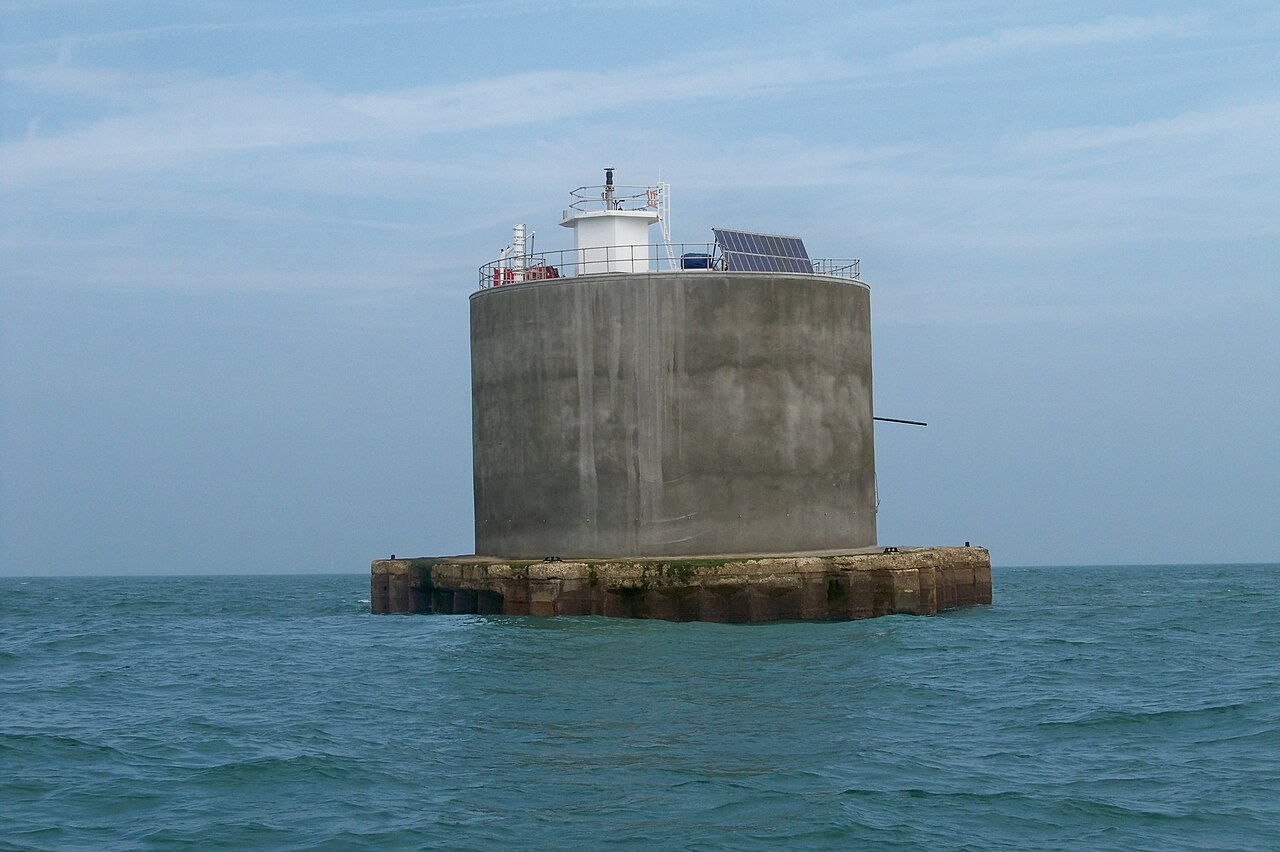
For those of you that don’t know the Solent the Nab Tower is a large navigation mark in the Eastern approaches to Portsmouth.
It has an interesting history. It was originally designed as one of a series of forts to be built across the English Channel during World War 1. The structure that makes up the tower was built at Shoreham by a team of 3000 workman. It originally had a concrete floating base with a steel superstructure.
The aim was to tow the seven tower structures out into the English channel, sink them in place in a line, then link the structures with steel boom nets. The idea being to close the English Channel to enemy shipping – particularly submarines. The tower cost £1m to build in 1918. Only one of the towers was actually completed. It was never deployed in anger.
In 1920 (on a very calm day by all accounts) it was towed into position above the Nab Rock off the Eastern End of the Solent. It replaced an existing light ship.
The 20 plus metre tower consisted of a series of water tight compartments that made it float and a steel and concrete upper structure. Flooding the lower compartments caused it to settle in place on the Nab Rock; all be it at an angle of 3 degrees. Something I hadn’t realised until I went looking at the history of what I assumed was just a big lump of concrete. Since 1920 the tower has had a number of upgrades and refurbishments. Originally it was a manned lighthouse, today its automated. The steel structure has been replaced and a helicopter pad installed on the roof.
You can find more about Nab Tower at:
Trinity House – The Nab Tower
Thats enough history for now.
The Race Review
JOG’s Nab Tower event this year was our first serious race of the season. Its a pretty simple idea. Leave Cowes at about 9.30am sail East down the Solent with the tide, pass between the forts off Portsmouth then head South East to the Tower. Round the Tower to Port, Sail back west to the Winner Navigation mark on the approaches to Portsmouth then back to Cowes. Remembering to leave Snowdon to starboard on the way out and port on the way back. If the breeze is good then the tide should turn soon after you round the Tower. Its roughly 35 miles there and back. A good early season warm up that if the weather is nice gets a good turnout.
Most of the crew met up Friday afternoon to sail Jengu over to Cowes for the race start on the Saturday morning. After rigging the boat up we headed out into the Solent passing Hugo Boss on the way in. After a brief man overboard drill to recover my hat we got down to the serious work of hoisting and dropping Spinnakers.
The gentle breeze was ideal for spinnaker practice giving us plenty of time to get the choreography right.
I’ll be honest the A1.5 we used has been in the shed for the last 2 years. It came with the boat and I wasn’t quite sure what it was. According to the North website its ideal for 0-10knots of wind and good when the sea is lumpy up to 12knots true. Friday with 0-6 knots true looked like the ideal day to take it for a spin. It turns out we’ve had this beautiful white asymmetric spinnaker sitting in the shed all this time. It flies beautifully in the light wind and rolls over to windward letting us sail quite deep angles. After much gybing dodging ferries and tankers we headed to Cowes for the evening feeling confident about our spinnaker handling.
Saying that; having sailed in the Solent for the last 10 years now I suspect we have had our 0-10knots true wind day for this year…
Saturday dawned with none of Fridays sunshine, but a little more breeze from the East. So as predicted we were looking at a long beat to the Tower followed by a deep reach or run back to Cowes.
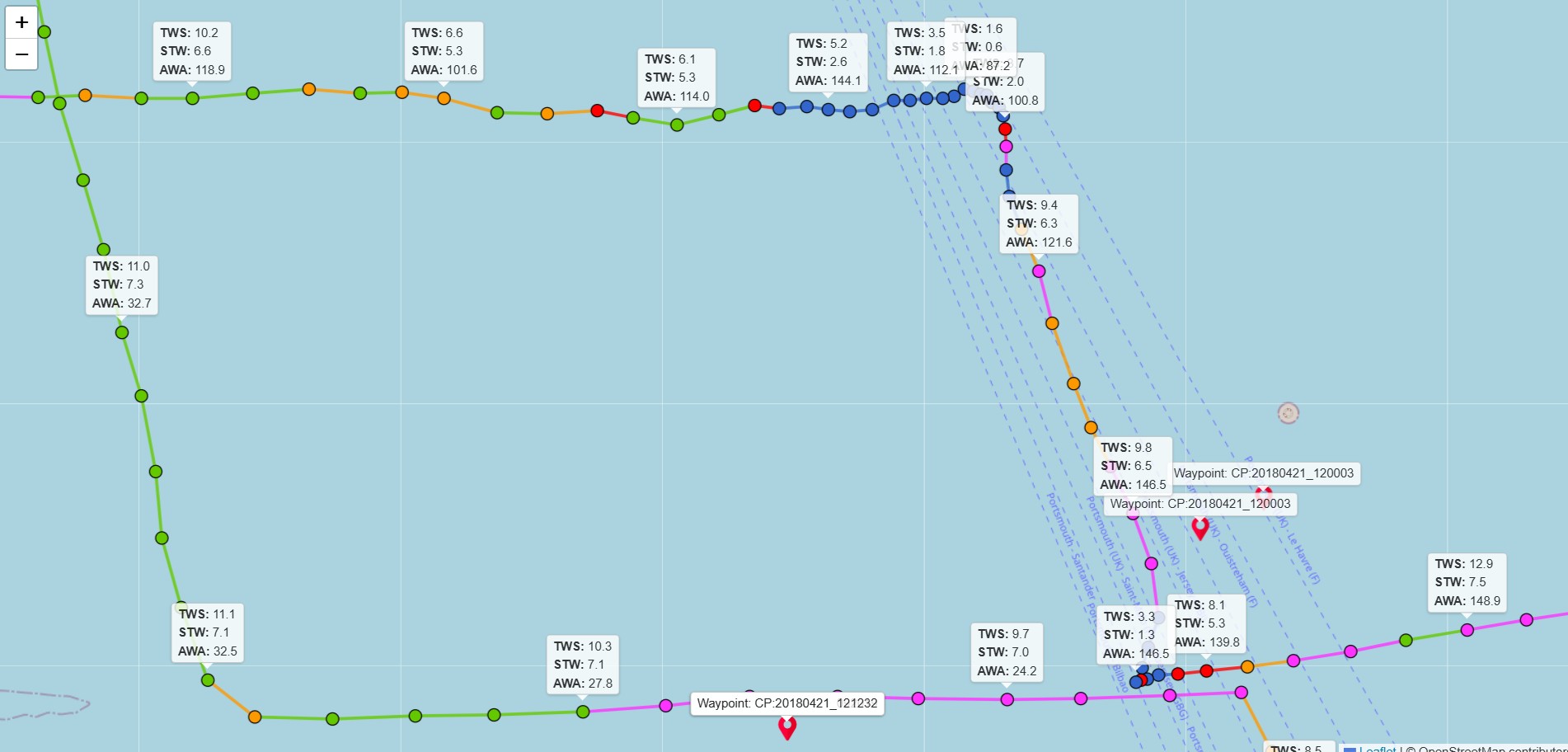
Our start was OK, safe and close to the Gurnard cardinal in the deep water. We try to be conservative at the JOG start line; with a 2knot tide over the line coming back after an over the line start is really bad news. We were probably row two on the grid, we sailed relatively low and fast on starboard for the first mile East from Cowes. Rolling a couple of faster starting but slower boats in the process losing a bit of ground to windward on the boats that had started closer to shore but getting into a position where we were in clear air. We had a couple of benchmark boats around us to compare our progress against; Jybe Talking the J109 of Chris Burleigh and Hot Rats a First 35 from Hamble. Sailing low looks like the data in this image:
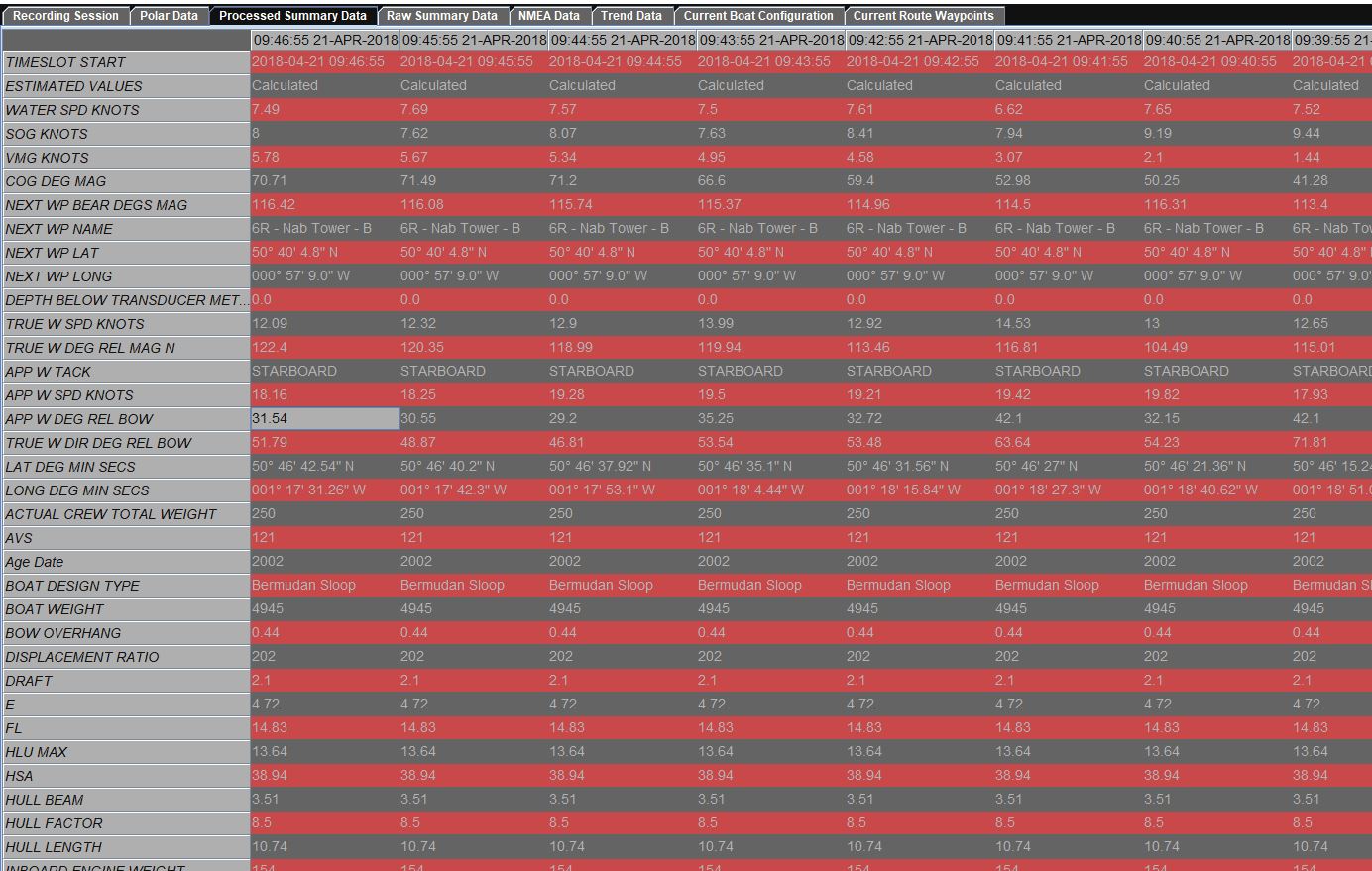
Once clear of the first group of boats we started to sail in a higher “mode” and this is where it got interesting. Sailing high looks like the data in this image .
Editorial note : we pulled this image from the same data on the Rockit Cloud Analytics platform. Something we couldn’t do when this article was originally written.
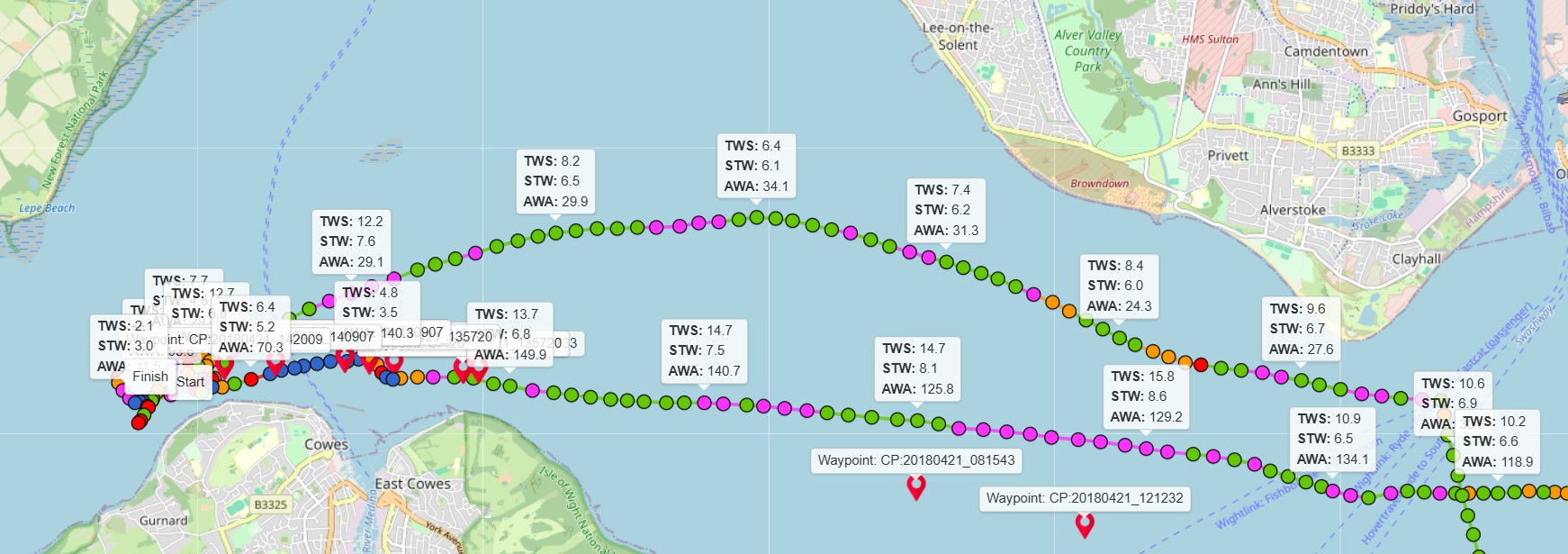
We experimented with Jib In-Haulers briefly with the No. 3 last year (2017/18 ed) but didn’t have much success. This year with a new Elvstrom C1 non overlapping Jib we can in-haul the Jib a lot further. Jybe Talking with a similar sail plan, IRC 1.006 versus Jengu’s 1.01, were using the windward jib sheet to in haul the Jib. The theory is if you in-haul the jib you get to sail a higher angle because the sail is sheeted closer to the centre line. Last year we had a big issue with the Jib back winding the luff of the main sail when in-hauled. This year we’ve resolved that problem by sailing with a much tighter outhaul and correspondingly flatter mainsail. The boats balance is very good with that sail plan; we can sail the boat to windward with no hands on the wheel.
With the breeze touching 10-12knots at times we were able to maintain the gap to Jybe Talking sailing between 27 and 30 degrees to the Apparent wind. Sailing low is 30-35 degrees to apparent with the boat speed in the 6-7.5 knots range. High we are aiming for 27-30 degrees to apparent with boat speed in the 5.5-6.5 knots range. We can sail higher as close as 25degrees but at that point the boat speed starts to really drop off.
For the first 30 minutes with the breeze staying stronger we were able to maintain and slightly build the gap to Jibe Talking. They started further to leeward, slightly astern and settled a hundred metres or so back.
Then the breeze started to drop off a couple of knots to the 7-8knot range at which point Jibe Talking were able to sail slightly higher and break out of our dirty air. Whilst we could keep them behind by sailing slightly lower, in a straight who can point higher in the light stuff competition we got resoundingly between. By the time we got to Gilkicker Point off Portsmouth, Jibe Talking were ahead. The wind dropping and Jengu slowing is in the data image below:
Editors Note : this image is from the current Rockit Analytics Platform. The interesting line is the Grey Velocity Made Good on Course line versus the Green Depth Below Transducer line.
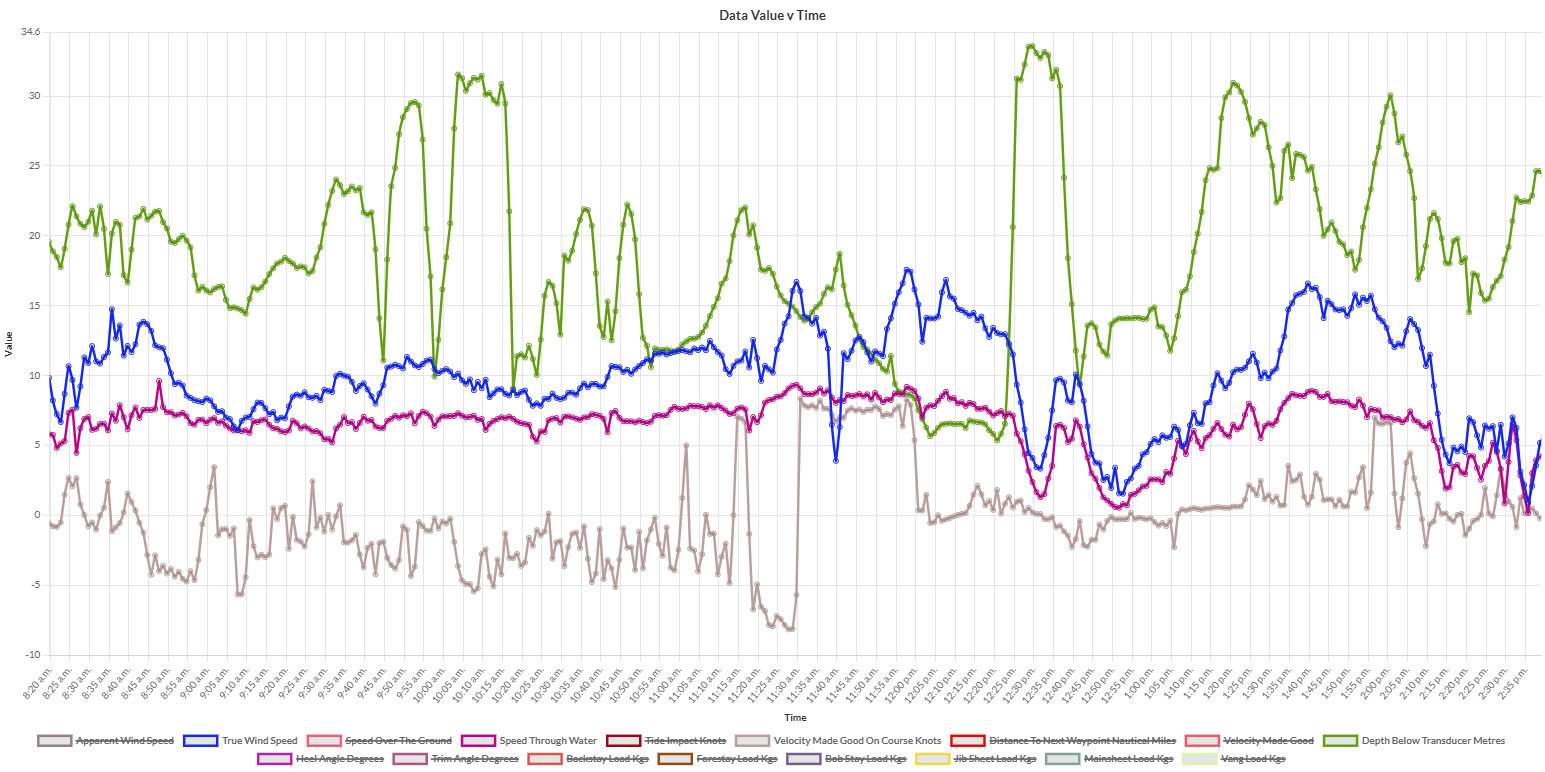
At that point we tacked across the deep water to the Island shore. In reality we had sailed most of the Cowes – Portsmouth leg in 16metres of water at the edge of the deepwater channel. With hindsight we probably should have tacked further out into the Solent to the north of Ryde Middle to get the best of the East going tide. Its a trade off; the cost of two tacks to get to the deep water versus the extra .5knots we would get from being in the faster tide. Pointing high probably wasn’t the solution. We gave time away to the boats in the deeper water and didn’t gain enough ground to do anything other than stay at the edge of the deep water out of the shallows. Tacking across the East going tide we gained the advantage of the lee bow tide pushing us upwind.
Another tack saw us out through the forts heading South East for the tower. Our other benchmark boat Hot Rats was still behind us so whilst we had lost touch with Jibe Talking we were holding our position against the rest of the fleet. A couple more tacks staying in the deep water away from the island shore saw us reach the Tower. In reality we probably over stood slightly; we able to came into the tower fast and carried the speed into the mark rounding.
Anyone who has sailed near to the Solent forts will confirm they have a surprisingly large wind shadow. Maybe its due to their round shape but they project a large zone of disturbed air. Add to that 50 or so sailing boats; there is a huge potential to get stuck mid rounding and drop a couple of places.
A lot of other boats were giving the tower a very wide berth, with our boat speed we able to turn relatively tightly around the tower and get a good line on the exit.
Editor update: The image below is of us getting closer than we would really like to the Tower in 2021. Just to give you a sense of scale !
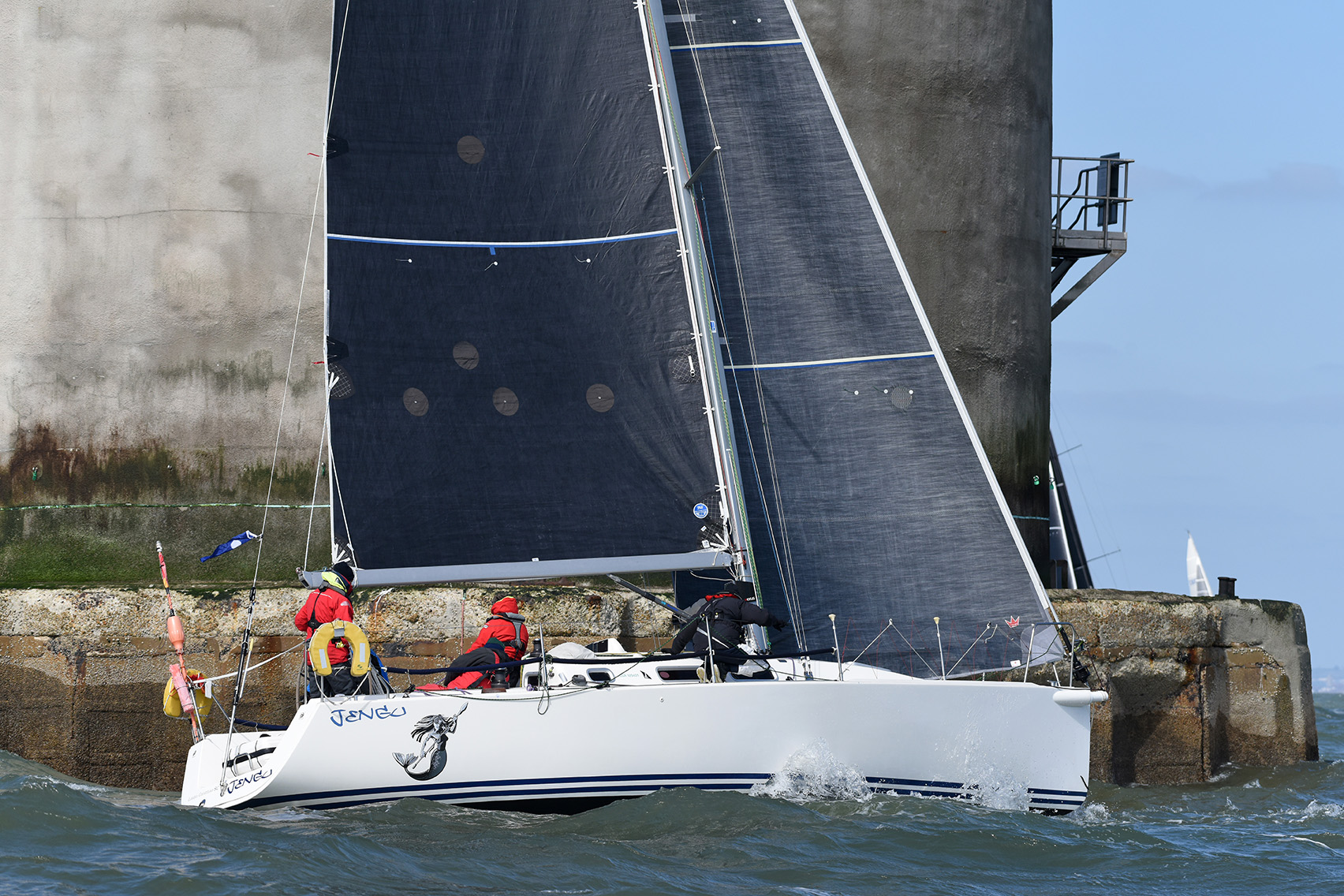
2 April 2021 JOG One Sails GBR South Lonely Tower Race around the Nab Tower Jengu : Image Credit : Rick Tomlinson
A good spinnaker hoist of the A2 not A1.5 set us off on the return leg. The wind had picked up to 12-15 knots, ideal for blasting downwind under the heavier A2. The speed topped out at 10 knots which felt quite fast.
We kept Hot Rats behind us all the way to the Gybe mark at the Winner navigation mark and got the inside line on one of the double handed Fast 3200’s gaining a couple of places going towards the forts. We reached the line between the two forts in good shape solidly mid-field; then the wind went very light.
This is a recurring theme; we are quite good in the 7-15knot range, not particularly brave in 20knots plus and lost at sea in anything under 5 knots. We clearly have an issue getting the boat going in the really light stuff. The wind dropped, the spinnaker collapsed, the mainsail flapped in the wash from the passing boats and the 2knot + East going tide pushed us back towards the Tower.
You can see from the image of the data that the boat speed dropped right off.
Its the classic dilemma; do you follow the bulk of the fleet that has just made it around the fort on the Island side but parked up; hoping to sail on the Island shore along Ryde Sands in a load of dirty air. Or do you go the other side and pick up the earlier change in the tide on the Lee-On-Solent side. We went north mostly because thats the way the boat wanted to go and to a certain extent once North of the mainland side fort thats the way the tide takes you into the shallows off Portsmouth. We got to maybe 250 metres South East of new Navigation marks for HMS Queen Elizabeth when the breeze completely shutdown. We were back to drifting around where we had the previous evening.
Time to break out the A1.5; the great advantage to no wind is it makes spinnaker changes a lot easier. Dump one down the hatch pull the other one out of the bag. After much gentle coxing and quietly cursing the power boats leaving a wash coming out of Portsmouth we got the boat sailing in the right direction. After being parked up for maybe 15minutes we got the boat going in the right direction and as the night before the big white sail proved more than happy to take us in the right direction.
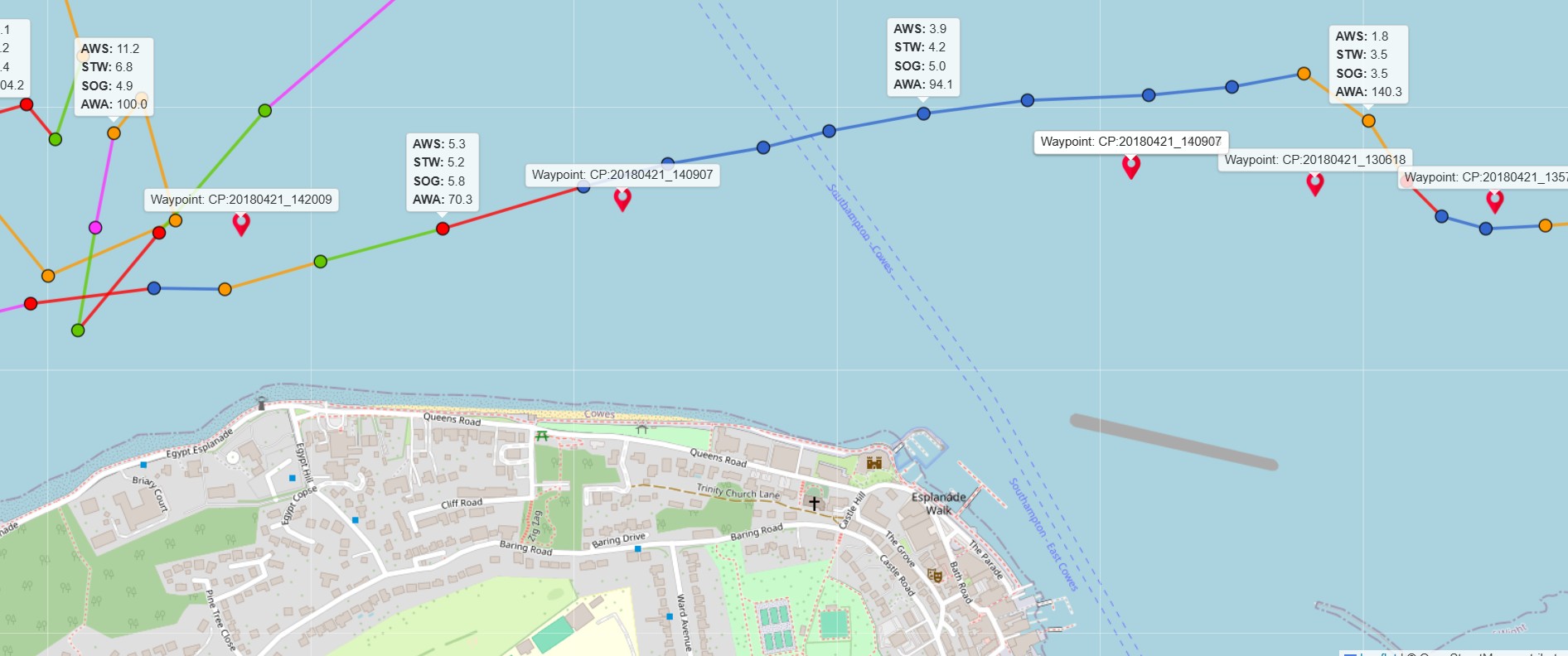
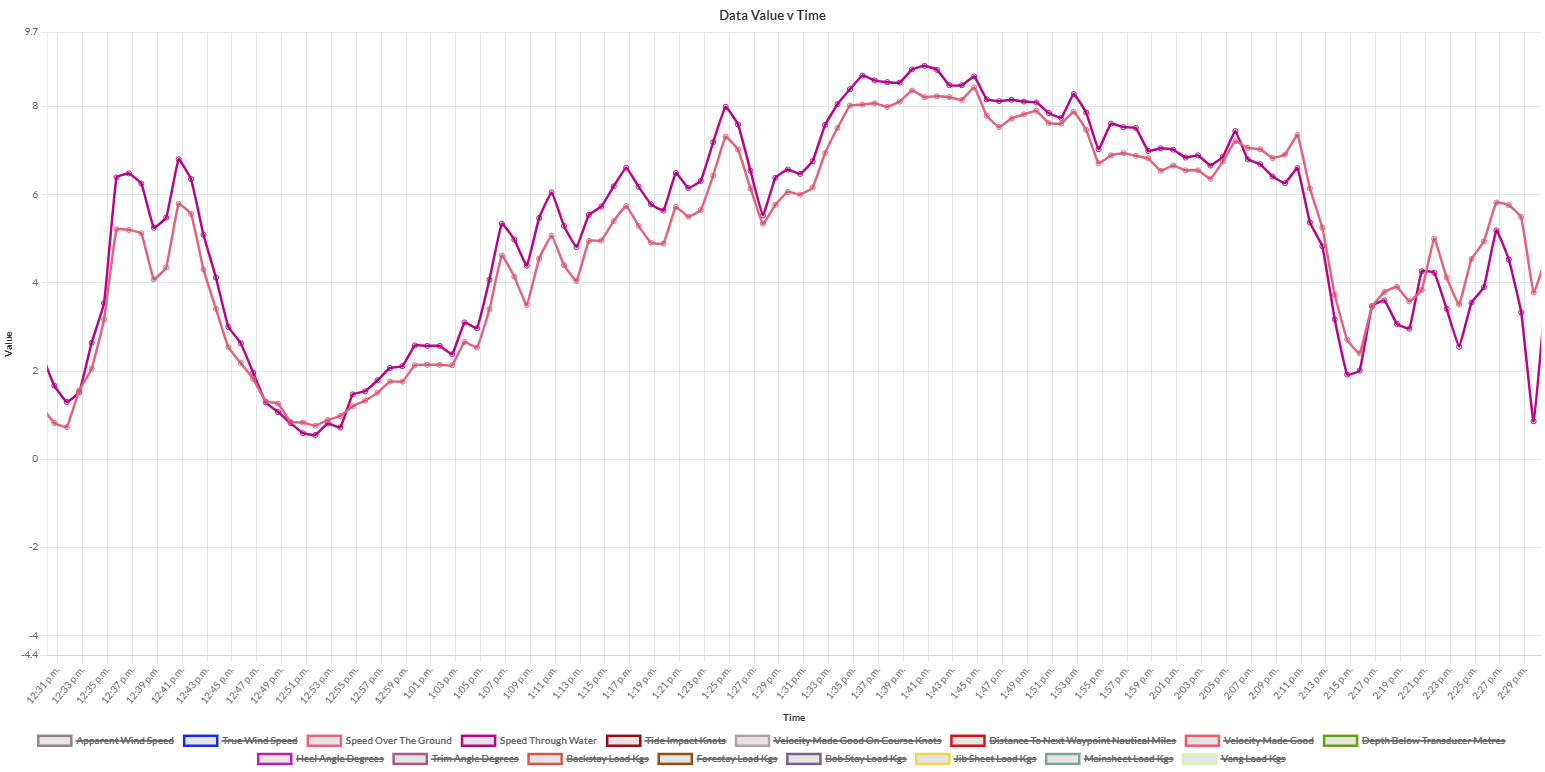
With the big sail up we get moving again and the tide starts to turn with us. You can see the Speed Through the Water starting to match then be overtaken by the Speed Over Ground.
With the big separation between the half of the fleet that went north with us and the bulk that went south it wasn’t clear where we would rejoin. We pointed the boat at Gurnard and did our best to keep the boat speed up. Gently the breeze increased; now we were getting into the theoretical upper range for the A1.5 it being a bit of an unknown quantity we were waiting for it to explode in a million pieces but it held together beautifully.
Somewhere around Norris we re-joined the main fleet; and I think part of the Warsash Spring Championship fleet as well. We had a close port and starboard pass with Night Owl 2; us on Port flying our spinnaker, Night Owl on starboard also flying their spinnaker. We crossed ahead by maybe 50 yards but at one point I thought we might have had to gybe out of the way which wouldn’t have helped our cause.
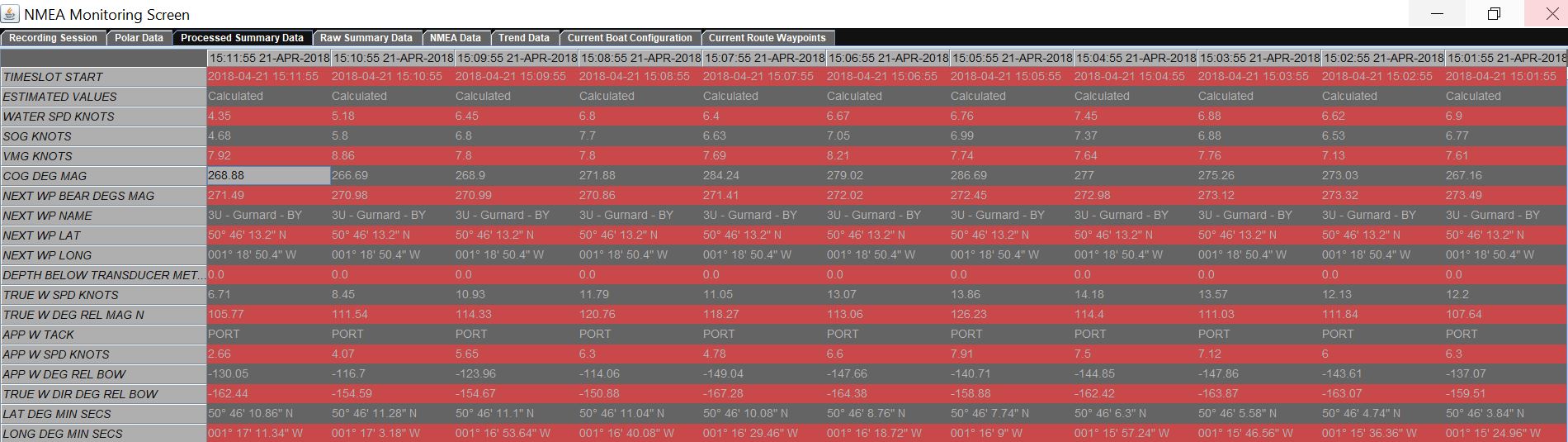
Coming down to the finish line we struggled to pass North of the Snowdon buoy and had to do a short Gybe onto Starboard to gain some ground to seaward. Gybing back we raced the last mile or so into the finish with one of the Sun Fast 3200’s All or nothing. By the time we got to Snowdon the tide was running fast to the west carrying us quickly towards the final mark.
You can see in the next set of data that there is a clear 1.5->2knot difference between the water speed and the speed over ground.
We had to negotiate a large very slow moving cruising Beneteau that for some reason had decided to raise its cruising chute in the approach to Cowes; their spinnaker handling needed practice, we were away and over the finish line by the time they got the sail flying.
You can see that from the Polars for the session below where we are fast. The number in brackets is the fasted that the boat has sailed on that True Wind direction/True wind speed combination. If we are getting it right as a crew we should be matching the figures in brackets.
Editor : Again this image is from the current Rockit Analytics Platform.
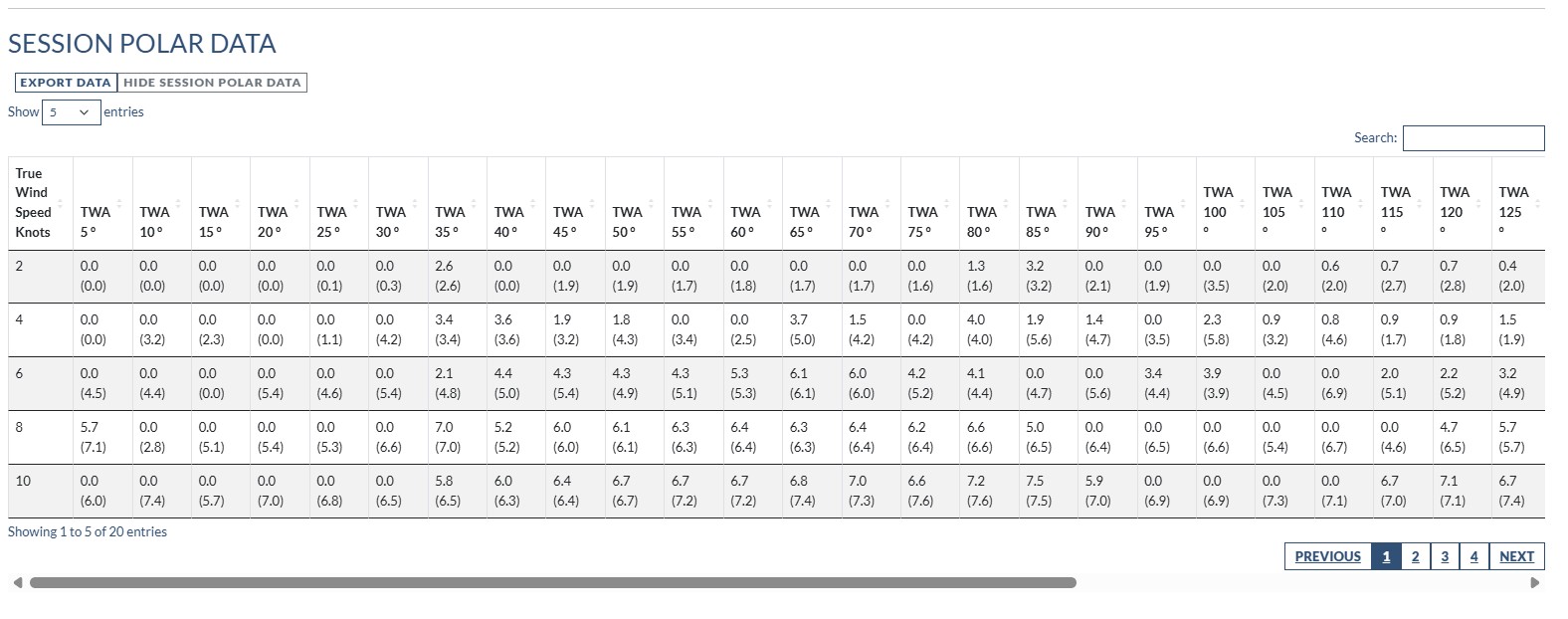
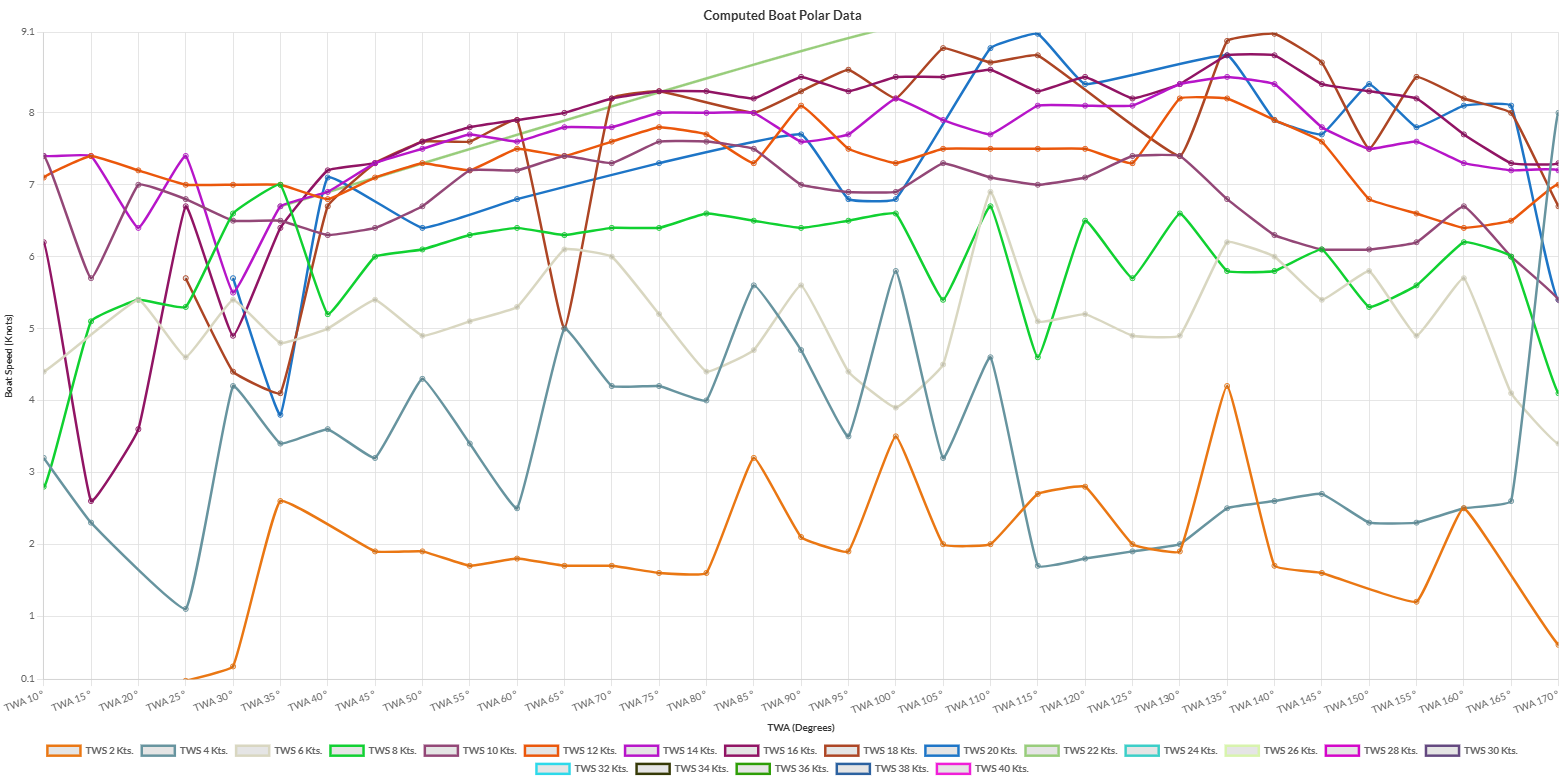
Overall with the more data we collect the better idea we have of how we can expect the boat to perform. But we still have a long way to go there are a lot of blanks on the Boat Polar data tables. I would expect the data values to get a smoother more separated curve as we get better as a crew and collect more data.
So what have learned ?
We have good boat speed in the 8-15knot range.
- Our spinnaker handling is much better and the results are more predictable.
- Our tacking is much, much better. We can be up and running on the new tack with the Elvstrom C1 a lot quicker than we ever managed with the huge overlapped No 1 from North.
- The A1.5/A2 spinnakers are a good combination of sails to have in the wardrobe.
- The depth gauge needs checking. We were getting an extra two metres of water on deck compared to Niall’s reading on the chart plotter below. We replaced the Nexus server box that runs the on deck instruments and think that we missed a setting somewhere on the server. The plotter is measuring from the bottom of the keel; the deck displays from the actual transducer. Its a 2 metre difference and something we need to fix before we go to the Western Solent for the next set of races.
- We need to spend more time sailing the boat in the really light airs and working out how to get the boat moving again once its stalled. Something that became apparent during the Spring series race we did on the Sunday.
Next race is the JOG Cowes – Yarmouth – Cowes weekend the third weekend in May. It will be interesting to see if we can work our way up the fleet then – hopefully we will have a more consistent breeze…
Bill/May 2018
Originally published May 2 2018 updated March 2026.