
Back in March we took part in the JOG Lonely Tower Race. It was our first race for 2026 as a crew.
We had a forecast for a very light airs weekend. JOG shortened the course before the start acknowledging that there was no way that the fleet would make it all the way to the Nab Tower and back in the circumstances.
The Game Plan
Our Predict Wind forecast showed the wind was due to fill from the East. The skipper, who takes full responsibility for this navigation stuff up, thought that the tide would stay east flowing for long enough to get us to the wind.
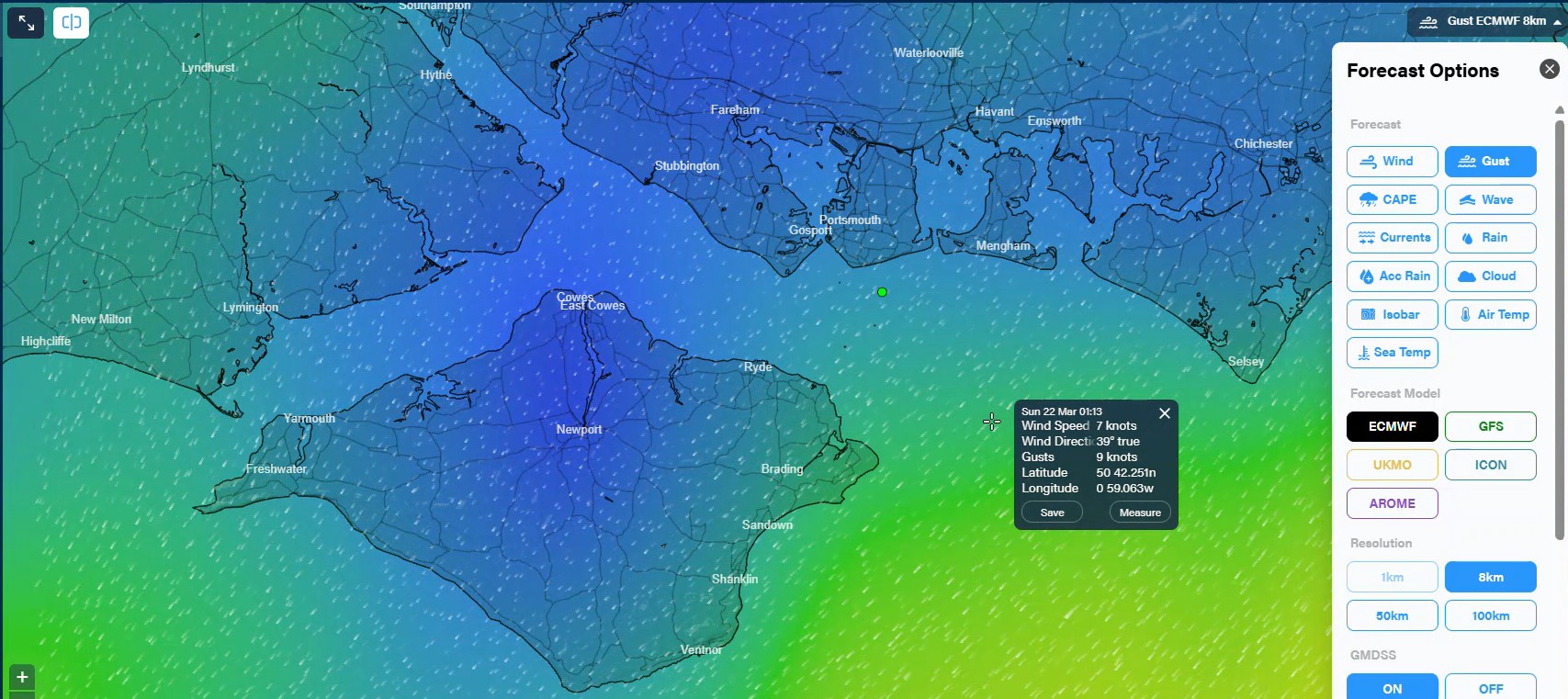
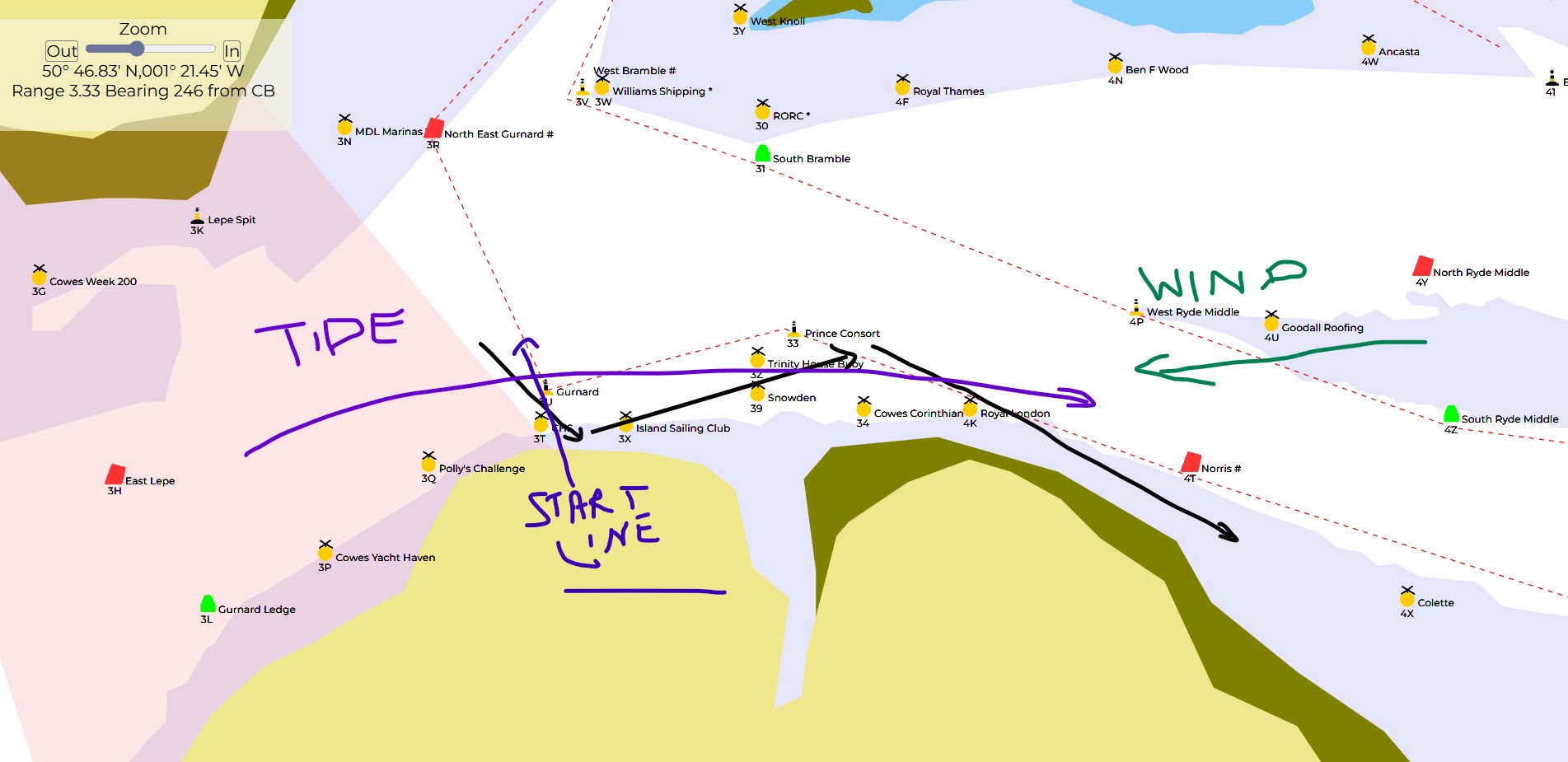
Starting from the JOG start line at Cowes we wanted a clean start. With the tide behind us being over the line at the start would probably have been the end of our race getting back the right side of the line against the tide in the light hours would given away a lot of ground to the rest of the fleet.
JOG have in recent years added a gate to their courses to keep starting boats away from the main shipping channel. You have to pass between a yellow mark called Snowdon and the Prince Consort Cardinal Mark. Thats quite an important bottle neck in the course that keeps the fleet together in the early stages of the race.
The Race
So we went for the conservative start on Port tack crossing behind the fleet to go to the shore near the Royal Yacht Squadron start line then tacking back out. We ghosted back out into the Solent with the tide pushing us East.
The next battle was to drift the boat between Prince Consort and Snowdon. With the majority of boats choosing to start on starboard and head straight towards the mainland shore initially then tack back to loop around Prince Consort we hit traffic. In light airs traffic means even less clear air and we drifted with limited steerage towards the pack. Most of whom were also trying to make sure they made it through the gate and didn’t end up colliding with the Prince Consort mark (or each other).
Some time later we cleared Prince Consort and started to drift with the tide East. It seemed like a great plan keeping the boat pointing into the wind with tide behind helping generate more apparent wind to drive the boat forward; effectively giving us a couple of extra knots wind speed. We knew the wind was forecast to fill in from the East and the tide was taking us towards where the breeze was due to fill in from. The rest of the fleet headed over to the mainland shore and we watched them drift away into the distance.
Always Check The Tide
Thinking that JOG would have started the race at 10am at the bottom of the tide to give competitors the best chance of making it to the target mark at the other end of the Solent was our undoing….
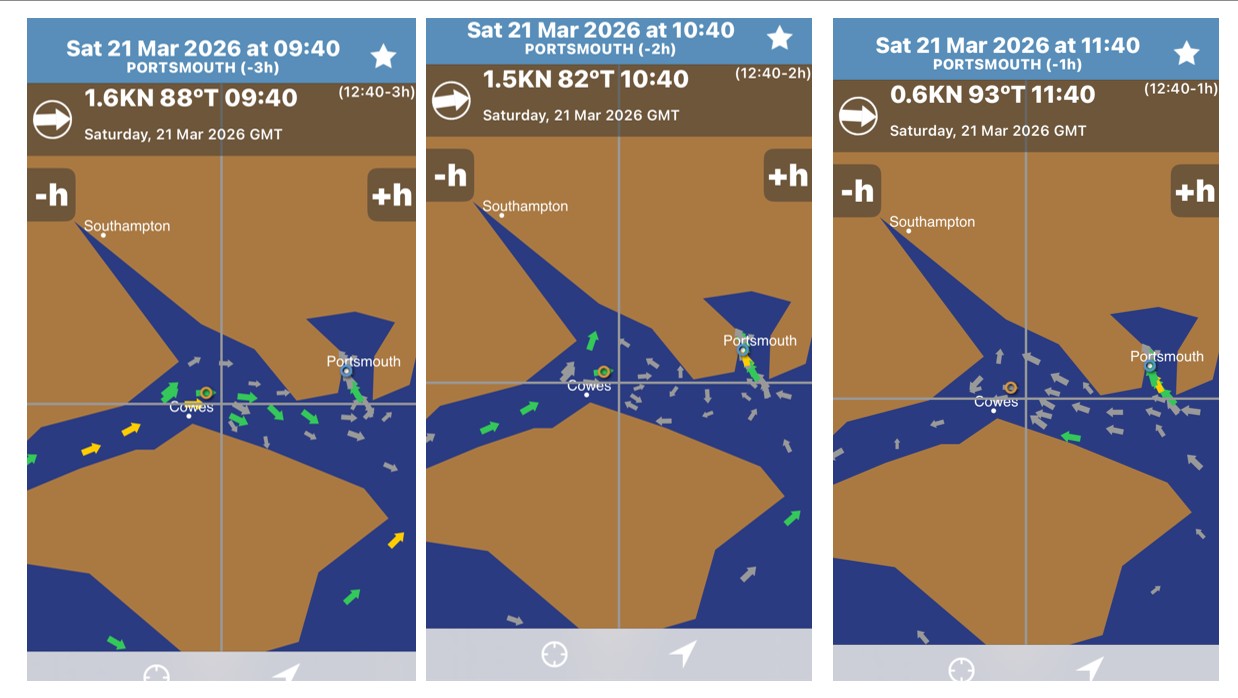
With hindsight we should have checked the tides planner app to confirm our assumptions but when you have been doing a race for 15 years you get complacent. Lesson learned.
As we realised the tide wasn’t doing what we thought it would we clawed our way into Osbourne Bay to wait for the wind out of the tide. We could have chased the fleet across to the mainland shore but came to the conclusion that ship had sailed. We could see from the wind hole we sat in that the rest of the fleet was making good progress on the mainland shore though we assumed in more adverse tide.
After a set of slow tacks the wind did fill in and shift as expected and we set off for the windward mark, which we rounded before heading back to Cowes for the finish with the tide now fully behind us. As we reached Cowes the wind again went very light and we drifted under main alone having dropped the spinnaker as it was adding no value whatsoever over the finish line. Downwind with 2-3knots of tide behind in 4-5knots of true wind effectively reduces the apparent wind driving the boat to 1-2knots.
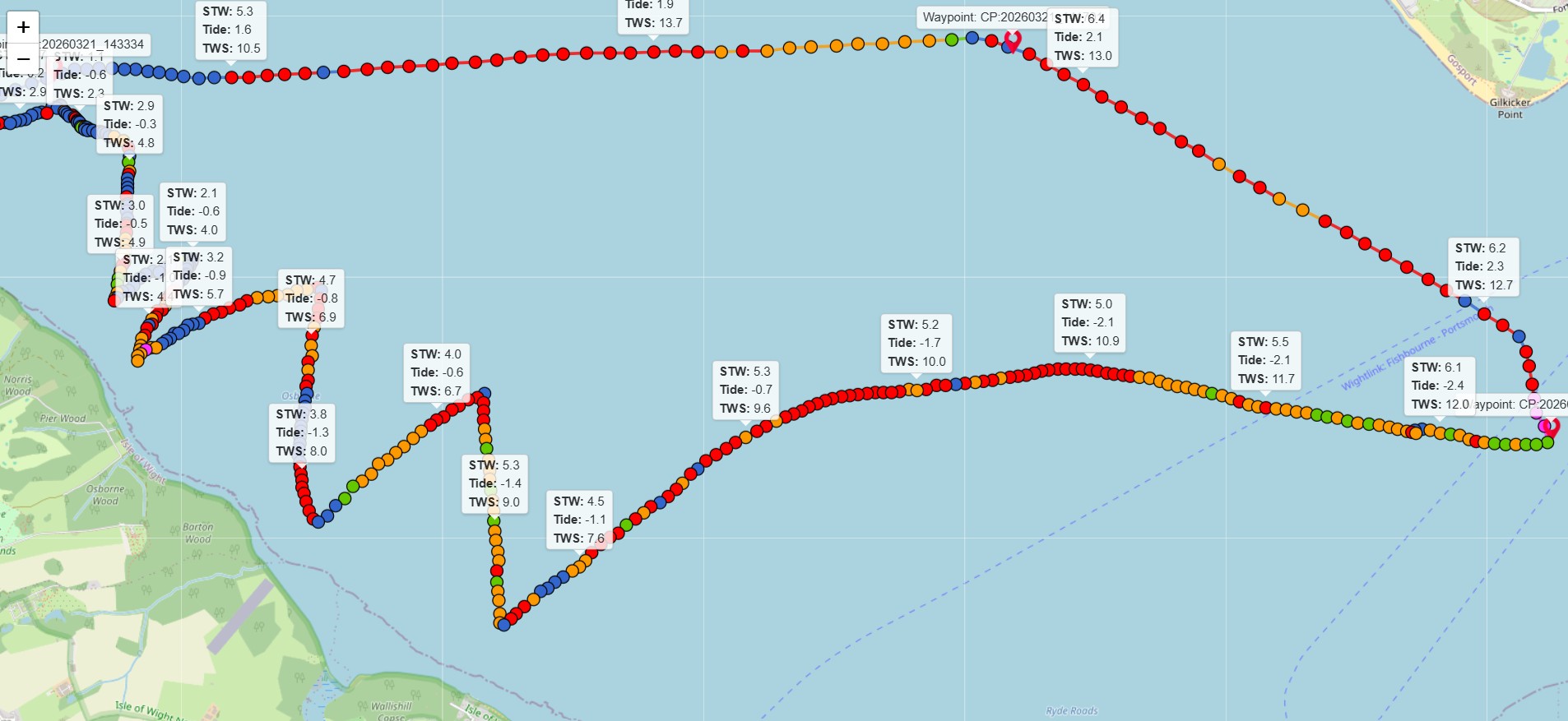
Our spell in the wind hole at the western end of Osbourne bay had cost us over an hour of lost time compared to the rest of the fleet.
Lessons Learned
So race one 2026 taught us quite a lot.
- Check the tides. Don’t make assumptions.
- Check the forecast. We knew the wind off Cowes would be light but we thought there would be enough tide to carry us through the wind hole to get to the new breeze. There wasn’t. There was significantly more wind on the mainland shore.
- Going to the other side of the course compared to the rest of the fleet is only worth doing if you have completely lost out; its a last throw of the dice when nothing else works. At the start if you are with the pack and everyone else goes the other way you need to work on the assumption that they know something you don’t.
- Keeping the boat moving in the light air is good to practice. We managed reasonable boat performance upwind and it gave various crew members the chance to helm in the light air conditions; so we built the skill level on the boat.
- Getting the skipper off the helm when they are on the larger size does the boat trim no harm.
- We did a good hoist and drop of the spinnaker. Friday practice day paid off. We didn’t get to the first windward mark and have to do the first spinnaker hoist of the year; we were practiced and ready to go.
I’ve been saying for a while that racing successfully is mostly about achieving the following;
- Being on time for the start
- Not messing up the manoeuvres, hoist, drops, tacks etc
- Sailing in clean air
- Doing the race marks in the right sequence
- Being on the right part of the race track at the right time.
- Having the right sails up.
We definitely managed 1,2,3, 4 and 6. We just need to work on 5 !
We are looking forward to more racing with JOG in 2026.
Cover photo credit : Graham Lacy with Cougar from London School Of Sailing in the foreground.
Bill/April 2026